
Terraforming Mars
Twin Sails InteractiveBoard
3.71.26K Reviews
- Version
- 2.11.7.131308
- Installs
- 100.00K
- Age Rating
- Everyone
Screenshots
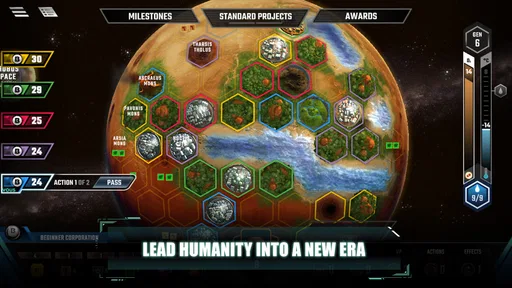
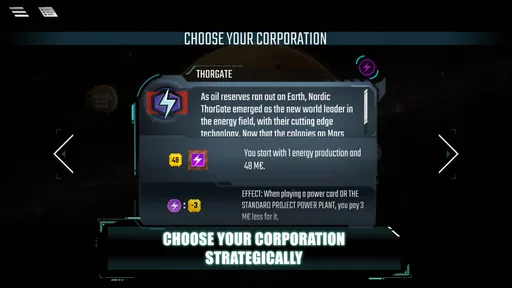
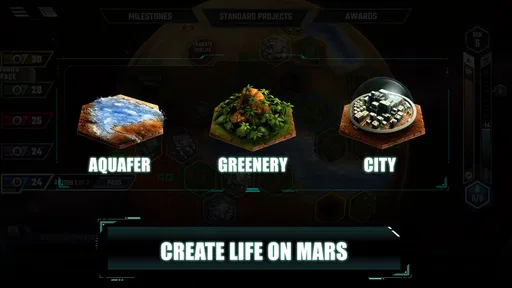
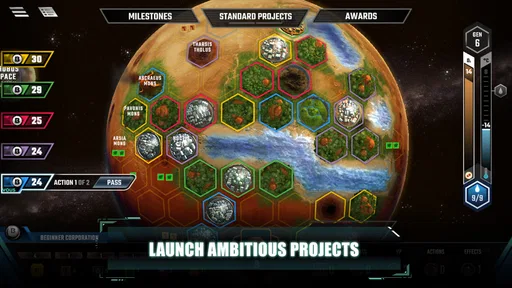

Our Review of Terraforming Mars
 Analysis by Appyee
When a turn in a digital board game feels confusing, it is tempting to blame the controls. With Terraforming Mars, I’d first check whether I’m weighing the choices correctly: the appeal lies in planning around a shared planetary goal while making my own projects pay off. It is a substantial strategy game, not a quick board-game diversion, so a little patience at the start goes a long way.
Where newcomers can get stuck
The main early hurdle is understanding how immediate gains fit into a longer plan. A project may help with a current need, build toward a later advantage, or do both, and the best-looking move is not always the most useful one. I find it helps to pause before committing and ask what the action changes now, what it sets up, and whether it supports the direction I’m pursuing.
The different planetary goals can also compete for attention. Temperature, oxygen, and oceans all matter, but trying to push every track at once can leave a strategy unfocused. I recommend watching how the shared conditions are progressing and choosing projects that fit that pace, rather than treating each available improvement as equally urgent.
Cards bring another kind of decision pressure. Their value depends on timing as well as their printed effect: a card that looks modest can make sense as part of a plan, while an exciting option may be awkward if it drains resources needed elsewhere. When I’m learning, I avoid judging a card in isolation and instead consider what it lets me do over the next few turns.
Checks that make a first session easier
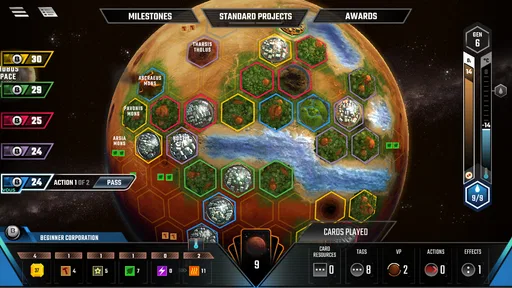
Before starting, I’d take a moment to get comfortable with the board, the available actions, and the information shown around each choice. This is a game where a small interface pause can prevent a much bigger strategic mistake. If an option seems unclear, rereading its on-screen explanation is more useful than tapping through quickly and trying to reconstruct what happened afterward.
It also helps to begin with a simple objective. Rather than trying to master every project and combination immediately, I focus on learning how resources connect to the actions I want to take. That makes the first session easier to follow and gives each decision a practical purpose. Once the basic rhythm feels familiar, I can pay closer attention to longer-term planning.
For players coming from the physical board game, the digital format changes the feel of play: the device handles the presentation of a turn, while I still have to do the strategic thinking. If I’m used to discussing options aloud around a table, I may need to make a deliberate habit of inspecting the board state before acting. For someone new to the game, the digital version can be a way to learn at an individual pace, but it still rewards careful attention.
Recovering from a confusing turn
If I lose track of why a position changed, I slow down and review the current state rather than immediately making another move to compensate. I look at which planetary conditions have advanced, what resources remain available, and whether my next action still supports my plan. That simple reset helps distinguish a genuine setback from a move whose payoff is simply delayed.
I also treat an imperfect turn as information for the next decision. If I spent too much to secure a short-term benefit, I can shift toward a less demanding project instead of forcing the original plan. The game’s strategic variety makes adaptation more useful than stubbornly chasing one idea after circumstances have changed.
When a different option fits better
This is not my pick when I want a very short, low-effort pastime or a game that makes its strategy obvious at a glance. The choices ask for planning, and the combination of resources, projects, and planetary progress can feel demanding if I’m tired or only have a few spare minutes. In that situation, a lighter board game is a better match.
It is more appealing if I enjoy comparing a digital adaptation with the usual tabletop experience. A physical game can make face-to-face conversation and shared table presence the main event; this version puts the focus on making decisions through a screen. Neither format is automatically better. I’d choose the app for convenient solo strategy time and a physical session when the people around the table are part of what I want from the evening.
Setting the Scene on Mars
In Terraforming Mars, you’re tasked with the ambitious goal of making Mars a livable planet. The game is set in the 2400s, where humanity has finally decided to make Mars its next home. You play as a corporation with the resources and technology to undertake this colossal project.
The game beautifully integrates science and strategy, offering a unique blend of challenges that keep you on your toes. From managing resources to advancing technology, every decision you make has a ripple effect on your progress.
Gameplay Mechanics and Features
The mechanics of the game are intuitive yet complex enough to satisfy even the most seasoned strategy enthusiasts. You’ll need to balance three major elements: temperature, oxygen level, and ocean coverage. Each of these is crucial for making the Martian environment sustainable.
One of the standout features is the variety of projects you can undertake, like creating cities, building greenhouses, or mining for resources. Every project comes with its own set of challenges and rewards, and the strategic depth here is simply astounding.
There’s also a card system that adds layers of strategy. Cards can provide immediate benefits or long-term advantages, and choosing which ones to play at the right time is key to success.
Visuals and User Interface
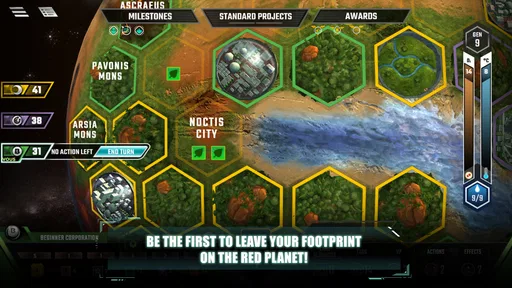
Visually, Terraforming Mars is a treat. The graphics are crisp and detailed, capturing the stark beauty of Mars and the futuristic tech you bring to it. The interface is user-friendly, making it easy to navigate through various menus and options without feeling overwhelmed.
The design is sleek, and the color palette does a fantastic job of reflecting the game's theme. The attention to detail is evident, and it really helps immerse you in the experience of terraforming a planet.
Challenges and Replayability
What really impressed me was the game’s replayability. Each playthrough can feel drastically different due to the random distribution of cards and the different strategies you might employ. This keeps the game fresh and engaging, even after multiple sessions.
The difficulty curve is well-balanced. It starts off easy enough for newcomers but ramps up the challenge as you progress, making it satisfying for veterans looking for a deeper experience. You’ll find yourself constantly adapting and tweaking your strategies to outsmart your competition.
Practical fit, cost, and verdict
As a paid board game from Twin Sails Interactive, this is best viewed as a substantial strategy purchase rather than a casual free download. It costs $8.99, with optional in-app purchases priced from $1.49 to $5.99 per item. I’d decide whether the core style of play suits me before spending: the price is easier to justify if I expect to return for varied sessions, not if I only want to try one brief game.
The Android version is listed for devices running Android 7.0 or later, and the current version is 2.11.6.131305. If I hit a snag, I’d start with sensible checks: confirm the device meets that minimum, close and reopen the game, and make sure the app is current. If a particular choice seems unavailable, I’d check the game state and the action’s requirements before assuming the interface has failed.
The game has an Everyone age rating, an average rating of 3.8 from around 9,700 ratings, and more than 100,000 installs. Those figures suggest a real audience, though they cannot tell me whether its deliberate pace will suit my own habits. I’d give more weight to whether I like multi-step planning and the satisfaction of watching a slow shared objective develop.
A realistic use case for me is a quiet evening when I have enough attention to think through several linked decisions. I might begin with a modest plan, notice that another planetary condition is advancing faster than expected, and redirect my resources instead of sticking rigidly to my first idea. That sort of adjustment is where the game feels rewarding: the challenge is not simply to make progress, but to decide which progress is worth pursuing now.
For a first session, I’d focus on learning how actions and cards fit together, then use later plays to experiment with different priorities. That approach is more satisfying than expecting to understand every strategic possibility immediately. It also makes replayability practical: each new distribution can encourage a different response, without requiring me to invent an elaborate personal challenge.
Final Thoughts
In conclusion, Terraforming Mars is a must-try for anyone who loves strategy games and has a knack for science fiction. It’s a game that challenges your intellect while providing a genuinely fun and immersive experience. Whether you’re a solo player or enjoy competing against others, this game offers countless hours of engaging gameplay.
If you’re ready to embark on a journey to tame the Red Planet, download and play Terraforming Mars. Trust me, it’s an adventure you won’t want to miss!
Verdict
Strengths of Terraforming Mars
- Engaging strategic gameplay.
- High replay value.
- Smooth user interface.
- Multiplayer mode available.
- Detailed tutorial for beginners.
Limitations of Terraforming Mars
- Occasional lag issues.
- Limited offline functionality.
- In-app purchases required.
- Complexity might overwhelm.
- No cloud save option.
Other Releases by Twin Sails Interactive
View All
Carcassonne: Tiles & Tactics
Board2.1

Agricola All Creatures...
Board3.8

A Game of Thrones: Board Game
Board3.3
Similar Picks in This Category
View All
Ludo King®
Gametion4.1

Ludo
Yarsa Games4.6

Tile Master® - Matching Game
Higgs Studio3.6

Checkers Online
CC Games4.6

Dominoes
Loop Games4.7

Chess
Chess Prince4.6
Frequently Asked Questions
What is Terraforming Mars about?
Terraforming Mars is a strategic board game adaptation where players lead corporations with the goal of making Mars habitable for humans. It involves resource management, project development, and strategic planning to increase the planet's habitability index, all while competing with other players for dominance.
How does the gameplay of Terraforming Mars work on mobile?
The mobile version of Terraforming Mars retains the core mechanics of the board game, focusing on strategic decision-making and resource allocation. Players take turns executing projects, managing resources, and competing for awards and milestones. The intuitive interface makes it easy to navigate through different phases and actions.
Is Terraforming Mars suitable for beginners?
While Terraforming Mars is known for its depth and complexity, the mobile app includes a tutorial and various difficulty levels to assist beginners. New players may find the learning curve steep, but the in-game guide provides a comprehensive introduction to the game's mechanics and strategies.
Are there multiplayer options available in Terraforming Mars?
Yes, the app supports both online multiplayer and local pass-and-play modes. Players can compete against friends or random opponents online, while the local mode allows multiple players to enjoy the game on a single device. This flexibility makes it accessible for both solo and group play.
What devices support the Terraforming Mars app?
Terraforming Mars is available on both Android and iOS platforms. It requires a device with a compatible operating system version and sufficient processing power to ensure smooth gameplay. Users should check the app store for specific system requirements and compatibility information.
Play our best games!


